Current Location: Blog >
Hong Kong server
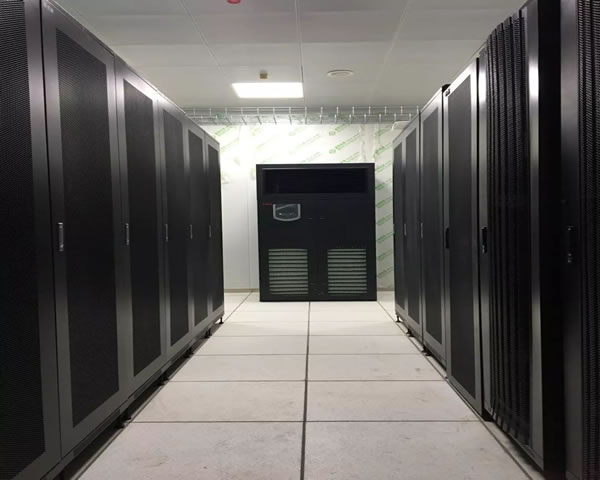
1.
overview: why multinational companies choose hong kong high-defense servers
• geographical and network advantages: hong kong is located in the center of the asia-pacific backbone network, and the access delay can usually reach rtt from mainland china to hong kong of 10–30ms.• legal and compliance facilitation: hong kong adopts an independent legal system for data processing and compliance strategies for global customers.
• multi-operator bgp: high-quality computer rooms provide multi-line bgp, downlink routing, and direct links to mainland china/southeast asia.
• attack surface considerations: as an international node, hong kong nodes may become amplification or transit targets and require a higher level of protection.
• cost and scalability: compared with overseas computer rooms, hong kong can provide high-defense solutions with controllable costs and flexible expansion.
2.
core technical points: server, vps, host and network composition
• hardware selection: it is recommended to use enterprise-class cpu (16 cores or more) and nvme ssd (read and write iops>100k) to support high concurrency.• memory and storage: memory should start at at least 32gb, and can be increased to 128gb for business-intensive applications, with raid or cloud disk for backup.
• bandwidth and ports: it is recommended to start with 1gbps ports for production environments, and 10gbps links or multi-line aggregation are optional for cross-border access.
• vps and containers: for microservices and elastic expansion, it is recommended to use a private cloud vps based on kvm/lxc with a public network high-defense pool.
• cdn and caching: edge cdn covers hong kong and surrounding nodes, which can offload static traffic and reduce origin site bandwidth and risks.
3.
ddos and high defense capability indicators and configuration examples
• peak protection capability: for enterprise-level high-defense services, it is recommended to choose a service with >=300gbps cleaning capability; for critical businesses, consider the 1tbps level.• cleaning delay: network cleaning links should be guaranteed to complete initial diversion and cleaning within 100ms.
• connection tracking and burst concurrency: the number of concurrent connections should be >= 1,000,000 to avoid syn/ack bottlenecks.
• behavioral analysis: enable automatic blocking and whitelisting based on thresholds and behavioral models.
• on-demand sample configuration table (sample data):
| model | cpu | memory | bandwidth | protective ability |
|---|---|---|---|---|
| high defense-standard type | 8c | 32gb | 1gbps (shared) | 300gbps cleaning |
| high defense-enterprise type | 16c | 64gb | 1~10gbps dedicated line | 500gbps+ cleaning |
| high defense - flagship type | 32c | 128gb | 10gbps dedicated line | 1tbps cleaning |
4.
compliance requirements: data sovereignty, privacy protection and cross-border transfers
• hong kong pdpo: there are clear requirements for the protection of personal data, and cross-border transmission must reasonably ensure data security.• gdpr impact: businesses that provide services to eu customers are required to comply with gdpr, and a common practice is to sign standard contractual clauses (scc).
• pci-dss: services that process payment information need to be pci-dss compliant, with strict server configuration, log, and encryption requirements.
• mainland china requirements: if the business involves mainland users and needs to be deployed in the mainland, icp filing and possible security assessment must be completed.
• certification and auditing: it is recommended to strive for iso27001 and soc2 reports at the same time to enhance cross-border trust and compliance certification.
5.
real case analysis: attack incident and response process
• github 2018 case: github suffered a memcached amplification attack in 2018, with peak traffic reaching 1.35tbps. it was eventually mitigated through cleaning services and the rules were upgraded.• actual combat on hong kong nodes: a multinational retail company's hong kong node suffered a 120gbps udp amplification attack, and the original bandwidth was saturated.
• response process: enable waf and traffic cleaning immediately, switch to the default high-defense blackhole policy and gradually restore the business whitelist.
• post-mortem measures: deploy higher cleaning thresholds, increase cdn edge caching, throttle and token verify apis.
• lessons and suggestions: practice emergency plans in advance, retain historical traffic baselines, and agree on sla and upstream cleaning capabilities with service providers.
6.
procurement and deployment recommendations: assessment, testing and sla key points
• evaluation checklist: confirm the cleaning peak, cleaning delay, concurrent connection limit, bgp multi-line capability and back-to-origin bandwidth.• testing method: conduct bandwidth step-by-step stress test, syn/udp/http flood simulation and back-to-source stability test (within compliance).
• sla and alerting: requires 24/7 ddos care response, cleaning start time commitment (for example, within 5 minutes) and auditable logs.
• operation and maintenance handover: ensure that the operation and maintenance manual, whitelist policy, emergency contact and evacuation strategy are specified in the contract.
• cost and expansion: for high-defense services billed on a monthly/traffic basis, long-term costs need to be considered, and solutions with flexible capacity expansion and on-demand upgrades are preferred.
- Latest articles
- Deployment Strategy For Offshore Cleaning Of Hong Kong High-Defense Servers In A Multi-Line Access Environment
- Best Practices For Data Synchronization And DNS Switching During The Migration Of Native Vietnamese IP VPS
- Key Compliance And Privacy Protection Considerations When Choosing Original IPs For Taiwan Services
- Strategies For Negotiating Discounts On Bulk Purchases Of Korean Original IPs, Along With Recommendations For Long-term Maintenance Agreements
- Bandwidth Optimization: How To Configure The Network Of Japanese Cloud Servers For Instant Response To Reduce Latency
- Potential Service Risks And Assessment Checklist Behind The Low Prices Of High-security Servers In The United States
- Comparison Of Latency Between Alibaba Cloud Hong Kong CN2 And Routes In Other Regions, Along With Selection Recommendations
- Practical Tips: Use FIFA With A Hong Kong VPS To Connect To The US And Achieve Low-latency Multiplayer Gameplay
- How To Set Up A Taiwan Proxy IP Server: Detailed Steps And Common Error Troubleshooting
- An Operator’s Perspective On Why Alibaba Cloud Japan Doesn’t Use CN2 And An Assessment Of Its Impact On Access Speed
- Popular tags
Delay
Taiwan Fashion
Taiwanese Fashion Original Ips
Ddos Defense
Cloud-on-cloud Decision-making
Liquidated Damages
Network Differences
Googlecloud
Taiwan Defense Server
Taiwan Deployment
Taiwan Native Ip Odin
Disaster Recovery
Content Optimization
Bandwidth Test
95th Percentile
Best Server
Taiwan Server
Minecraft
Dns Switching
Server Company Recommendation
Original Ecological Proxy
Taiwan Server
Authenticity
Enterprise Location Selection
Security Assessment
20m Bandwidth
Taiwan E-commerce
Cooperation Strategy
VPS Service Provider
Bitcoin
Related Articles
-
Understand The Performance And Application Of Hong Kong High-defense 300g Server
in-depth discussion of the performance and application of hong kong's high-defense 300g server to understand its advantages and applicable scenarios. -
How To Improve Website Access Speed In Hong Kong Vps Native Ip
this article provides detailed reviews on how hong kong vps native ip can improve website access speed and provide you with the best and cheapest solution. -

How To Build An Efficient Website Using Hong Kong Native Ip
this article introduces how to use hong kong native ip to build an efficient website. it is recommended that dexun telecom be a high-quality service provider to provide stable network support.